The Daily Disciplines That Compound Into Success: Easy to Do, Easy Not to Do
Written based on the teachings of Jim Rohn
The Daily Disciplines That Compound Into Success
I grew up on a farm in Idaho, and I learned something early that took me years to understand.
The harvest doesn't start at harvest time.
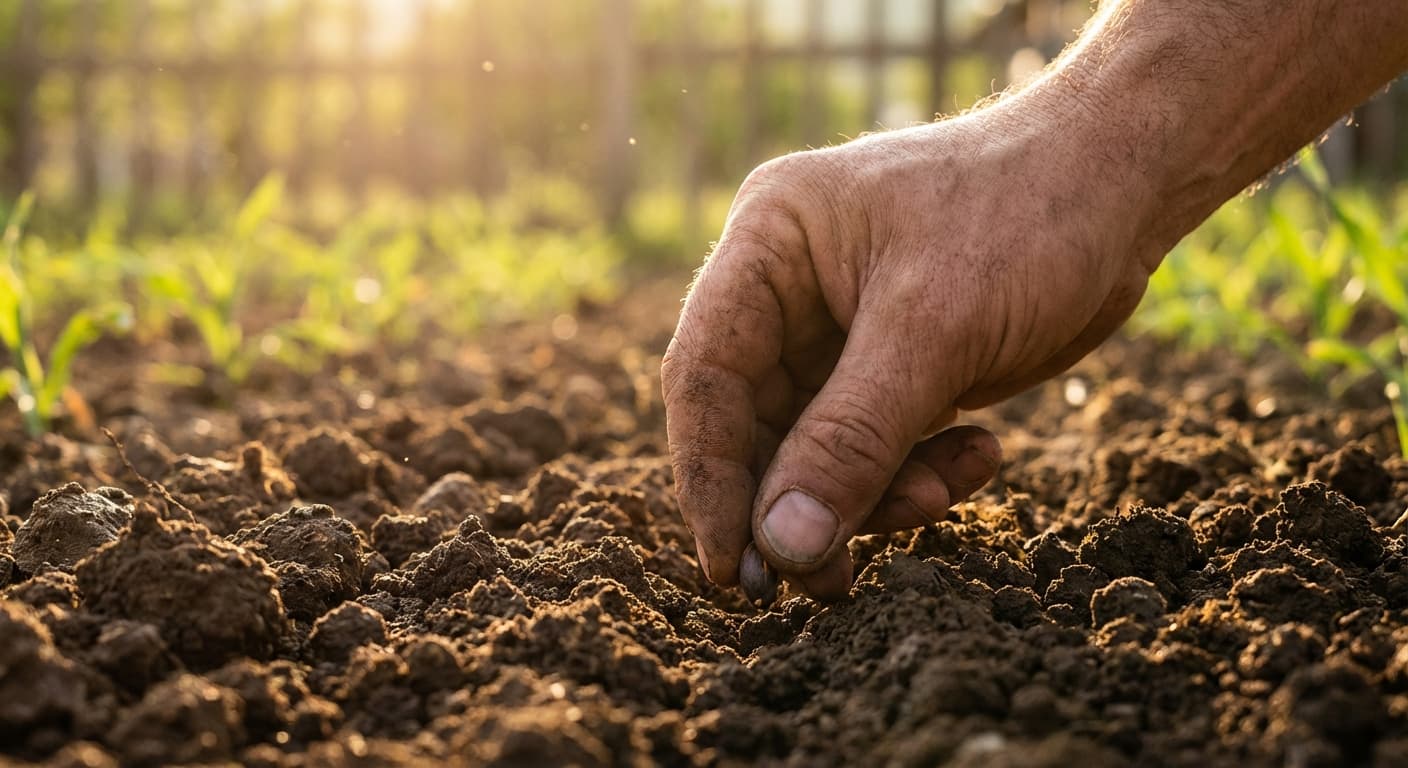
A farmer plants in spring, works through summer, and reaps in fall. But here's what most people miss — the most important work happens underground, where nobody can see it. The roots push down into the soil. The stem pushes up toward the light. And the farmer? He can't watch it happen. He just has to trust the process.
Somebody says, well how do you know it's working?
And I say, you don't. Not yet. But come October, you'll know.
The Invisible Work
Here's what I found out about success. The disciplines that create it are almost embarrassingly simple. We call those the easy-to-do things. Read ten pages of a good book. Write in your journal. Review your goals. Say something kind to someone you love. Take a walk. Drink water instead of soda.
Easy to do.
But here's the problem — they're also easy not to do.
And because they're easy not to do, most people don't do them. Not because they're lazy. Not because they don't care. But because nothing seems to happen when you skip them.
You skip reading today — nothing happens. Skip it tomorrow — nothing happens. Skip it for a month — still nothing dramatic. Your life looks the same. Your bank account looks the same. Your relationships look the same.
So you think, what's the big deal?
But the farmer knows better. He knows that if he doesn't plant in spring, he won't be hungry in spring. He'll be hungry in fall. The consequence is delayed. The connection between cause and effect is stretched across time, and most people can't see it.
A man asked me one time, Jim, what's the difference between successful people and unsuccessful people?
I said, successful people do what unsuccessful people are unwilling to do. And what they're unwilling to do is usually something small and boring.
The Disciplines I Learned
When I met Mr. Shoaff at age 25, I was broke, in debt, and full of excuses. I blamed the economy. I blamed the government. I blamed my company. I blamed traffic.
He said, Jim, let me ask you something. How many books have you read in the last ninety days?
I said, well, I've been busy.
He said, that's not what I asked. How many?
I had to tell the truth. None.
He said, and you wonder why you're broke?
That stung. But it changed my life.
Here's what he taught me. The disciplines that compound into success aren't complicated. They're just consistent. Let me give you a few that I practiced for forty years.
Read every day. Not when you feel like it. Not when you have time. Every single day. Even if it's just ten pages. A book a week is fifty-two books a year. In ten years that's five hundred books. You think that changes a person? Of course it does.
Keep a journal. Write down what you're learning. What you're thinking. What you're observing. Ideas are slippery — if you don't capture them, they disappear. My journals became some of my most valuable possessions.
Review your goals. Not once a year at New Year's. Every day. Because you become what you think about. And if you're not thinking about your goals, you're thinking about something else. Probably somebody else's goals.
Be a good listener. This is a discipline too. Most people are just waiting for their turn to talk. But if you really listen, you learn things. And people feel it. They know when you're present.
Do more than you're paid to do. Shoaff told me this one. He said, make yourself valuable. Don't ask what you're getting. Ask what you're becoming.
Spring, Summer, Fall
Now here's what I want you to understand about these disciplines. The results don't come immediately. That's the hard part.
You plant a seed in spring. Nothing visible happens for weeks. You water it. You wait. You water it again. Still nothing you can see.
But beneath the soil, the roots are spreading. The seed is cracking open. Life is happening. You just can't watch it.
The farmer doesn't dig up the seed to check on it. He trusts the process. He does his part — he plants, he waters, he protects — and he lets time do the rest.
Success works the same way.
You read a book. Nothing happens. You read another. Still nothing. You journal for a month. Your life looks the same.
But here's what's actually happening. Your thinking is changing. Your vocabulary is expanding. Your perspective is shifting. You're becoming someone different — someone who can handle more responsibility, more opportunity, more wealth.
We call that the compound effect. Not dramatic. Not instant. Agricultural.
The seed you plant today won't be visible until next season. But it will be visible.
The Truth About Time
Somebody says, but Jim, I don't have time for all this.
And I say, my friend, that's not a schedule problem. That's a philosophy problem.
You have twenty-four hours. So does everyone else. The question isn't whether you have time. The question is what you're doing with it.
A fellow told me once, I watch about four hours of television a day.
I said, how many books have you read this year?
He said, none. I don't have time to read.
Right?
The disciplines aren't time-consuming. They're time-reorganizing. Ten pages instead of ten minutes of scrolling. Thirty minutes of walking instead of thirty minutes of complaining. Five minutes writing in a journal instead of five minutes hitting the snooze button.
You don't need more time. You need more purpose.
What I'm Asking You to Do
Here's what I learned about disciplines. You can't do them all at once. That's not how it works. You start with one. You make it a habit. Then you add another.
The farmer doesn't plant the whole field in one afternoon. He plants a row at a time. Day after day. Until the whole field is seeded.
So let me give you an assignment, my friend.
Pick one discipline. Just one. Maybe it's reading. Maybe it's journaling. Maybe it's reviewing your goals each morning.
Do it tomorrow. And the day after. And the day after that.
Don't wait to see results. Don't dig up the seed. Just keep planting.
Because here's what the farmer knows that most people forget: the harvest always comes. Always. Not because you wished for it. Not because you hoped for it. But because you planted for it.
And the season you're in right now — whether you know it or not — is planting season.
Continue Reading
More from Jim Rohn's teachings
The First Person You Must Learn to Lead Is Yourself
You Don't Need Rock Bottom to Change Your Life

The Questions That Changed My Life: Why What You Ask Yourself Matters More Than What You Know

Winter Always Comes: How to Prepare for Life's Inevitable Hardships
Subscribe to the Jim Rohn Newsletter
Join our community receiving weekly wisdom for a better life.