Guard Your Mind: The Daily Discipline of Mental Hygiene
Written based on the teachings of Jim Rohn

Stand Guard at the Door of Your Mind
I remember a conversation I had with a man who couldn't understand why his life wasn't working. "Jim," he said, "I go to work, I come home, I try to be a decent person. Why am I stuck?"
So I asked him a simple question: "What do you do with your evenings?"
"Well," he said, "I watch the news, catch a couple shows, scroll through my phone for a bit."
"And what are you reading?"
He looked at me like I'd asked him to recite Shakespeare. "Reading? I don't really have time for that."
There was my answer. The man was broke, frustrated, and couldn't figure out why — meanwhile, he was spending three hours every night feeding his mind junk food and wondering why he felt mentally malnourished.
We call that standing at the wrong door.
Your Mind Is a Garden
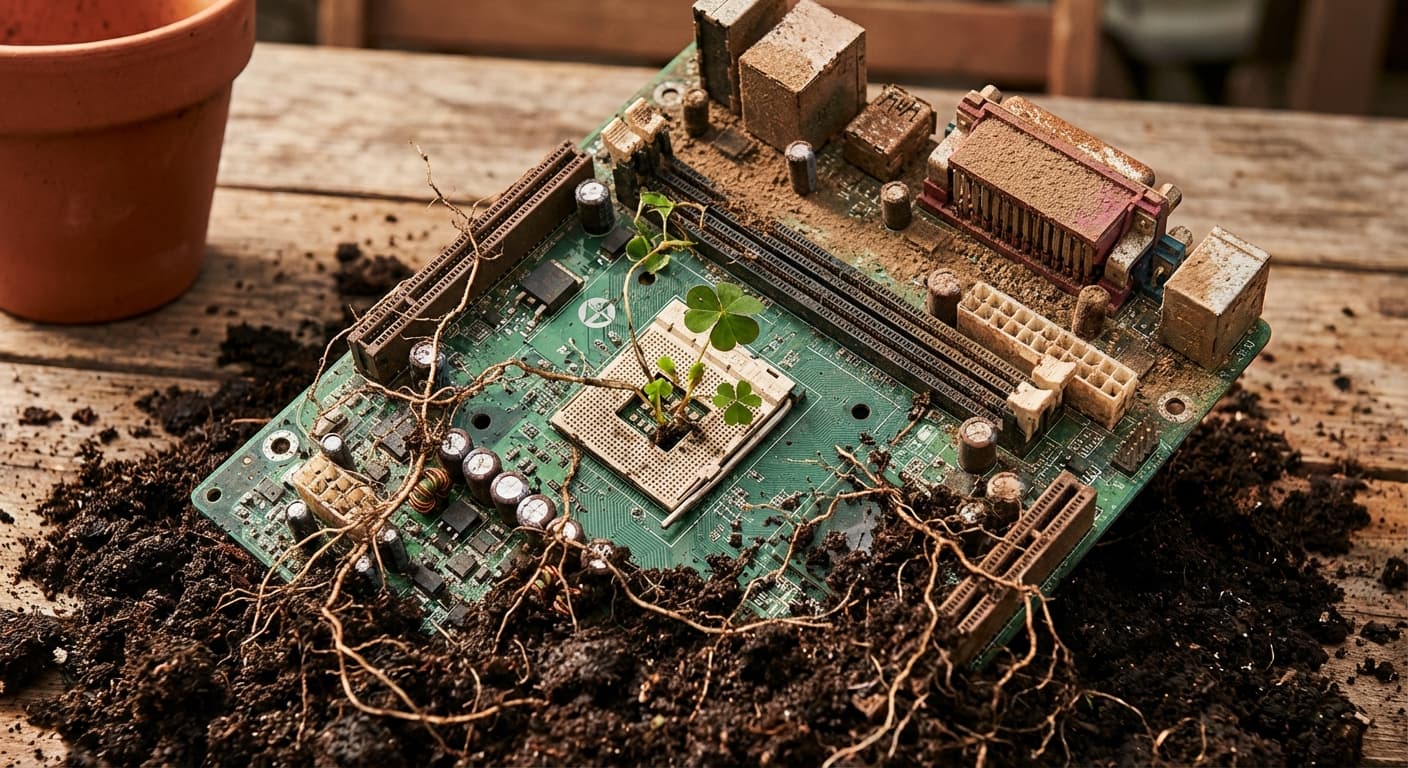
Let me give you a phrase to think about: your mind is a garden. And here's what every gardener knows — if you don't deliberately plant what you want, nature will plant what it wants. Weeds don't need an invitation. They don't need encouragement. You ignore a garden for two weeks and come back to find it taken over.
The same is true of your mind.
Most people treat their minds like public parks — anybody can walk in, drop whatever they want, leave their trash behind. They'll let any conversation, any television program, any social media argument plant seeds in their thinking. And then they wonder why their mental garden looks the way it does.
Mr. Shoaff taught me this early on. He said, "Jim, stand guard at the door of your mind." Not sometimes. Not when you feel like it. Every single day.
I said, "What does that mean practically?"
He said, "It means you decide what goes in. Just like you wouldn't let someone dump garbage in your living room, don't let them dump garbage in your head."
The Media Diet Nobody Talks About
Here's something I learned the hard way: you cannot watch the news for two hours and read good books for twenty minutes and expect the books to win. Volume matters. Repetition matters.
The news isn't designed to inform you. It's designed to agitate you, frighten you, keep you watching. That's the business model. And if you feed your mind a steady diet of crisis, scandal, and disaster, don't be surprised when your thinking starts reflecting that.
Somebody says, "But Jim, I need to stay informed."
And I say, "Informed about what? Which tragedy in which country is going to change the decisions you need to make today?"
Right?
I'm not saying become ignorant. I'm saying be selective. Fifteen minutes of news is enough to know what's happening. Three hours is mental pollution.
Here's what I did when I decided to get serious. I stopped watching the evening news every night. I stopped reading the newspaper cover to cover. I started reading books — good books, books that challenged me to think better, to do better.
And I found out something fascinating: the less junk I put in my mind, the clearer my thinking became. We call that the cleanup effect.
Who You Listen To Matters More Than You Think
Now let me tell you about associations. Who you spend time with isn't just a social question — it's a mental health question.
I knew a fellow once, sharp guy, had potential. But he spent his lunch breaks with the complainers. Every day, same group, sitting around talking about how the boss was unfair, the company was cheap, the system was rigged.
One day I pulled him aside. I said, "Do you realize you've been having the same conversation for six months?"
He said, "What do you mean?"
I said, "Same complaints, same anger, same conclusion — nothing's ever going to change. That's what you're feeding your mind every day at lunch."
He got defensive. "They're my friends."
I said, "I understand. But here's the question: are they helping you or hurting you? Because association doesn't just affect your mood. It affects your thinking. You start to see the world the way they see it."
Here's the truth: you become the average of the five people you spend the most time with. Not might become. Will become. If you hang around five broke people, you'll be the sixth. If you hang around five complainers, you'll start complaining. If you hang around five people who read books and set goals, you'll start doing the same.
We call that the law of association. And you can't break it any more than you can break the law of gravity.
Plant Before You Weed
Now here's the key: standing guard at the door isn't just about keeping bad stuff out. It's about deliberately putting good stuff in.
I got a good phrase for you — you can't weed a garden into productivity. You have to plant.
So what does planting look like? Reading. Reflection. Feeding your mind ideas that challenge you to grow.
I made it a discipline. Every morning, before I did anything else, I read for thirty minutes. Not the newspaper. A book. Something that stretched my thinking, that gave me new ideas, that reminded me what was possible.
And here's what I found out: the ideas you plant in the morning set the tone for your whole day. You read something profound about discipline at 6 a.m., and at 10 a.m. when you want to cut corners, that idea comes back to you. We call those mental reserves.
The problem is most people are running on empty. They haven't planted anything, so when the weeds show up — and they always show up — there's nothing there to crowd them out.
The Daily Discipline Nobody Wants to Hear
Let me be blunt: standing guard at the door of your mind is work. It's not a one-time decision. It's a daily discipline.
Every morning, you decide: what am I going to feed my mind today?
Every evening, you decide: what am I going to let in before I go to sleep?
Every conversation, you decide: is this helping me or hurting me?
It's not complicated. But it's not easy either. Because the path of least resistance is to let everything in. To scroll mindlessly. To complain with the complainers. To absorb whatever's on TV.
But here's what I found out after thirty years of teaching this: the people who take their mental diet seriously get different results than the people who don't. Not a little different. Dramatically different.
You show me someone with a clear mind, sharp thinking, and emotional resilience, and I'll show you someone who stands guard at the door. They read books. They choose their conversations carefully. They limit their exposure to junk.
You show me someone who's anxious, scattered, and can't figure out why life isn't working, and I'll show you someone who lets everything in.
Your Assignment, My Friend
So here's what I want you to do. Not tomorrow. Not when you feel like it. Today.
First, take an honest look at what you're putting in your mind. How much news are you watching? How much social media? What are you reading, if anything? Write it down.
Second, decide on one change. Maybe it's cutting your news consumption in half. Maybe it's reading for twenty minutes every morning. Maybe it's stepping away from a conversation that's pulling you down. Pick one thing.
Third, plant something good. Buy a book. A real book, something that challenges you to think. Make it the last thing you read before bed instead of your phone.
Your mind is the most valuable piece of real estate you'll ever own. You wouldn't let strangers walk into your house and rearrange your furniture. Don't let them walk into your mind and rearrange your thinking.
Stand guard at the door, my friend. Your future depends on it.
Continue Reading
More from Jim Rohn's teachings

The Questions That Changed My Life: Why What You Ask Yourself Matters More Than What You Know

You Cannot Change the Seasons, But You Can Change Yourself
Your Philosophy Is Your Operating System — Why Daily Mental Nutrition Determines Everything

The Book You Don't Read Won't Help: Why Implementation Beats Information
Subscribe to the Jim Rohn Newsletter
Join our community receiving weekly wisdom for a better life.