The Day I Stopped Blaming and Started Building
Written based on the teachings of Jim Rohn

The Philosophy of Personal Responsibility
A man said to me one time — and I'll never forget this — he said, "Jim, you don't understand my situation. You don't know what I'm up against."
I said, "You're right. I don't know your situation. But I do know this: your situation isn't the problem."
He didn't like that much.
But here's what I've found out after all these years of studying success and failure, achievement and mediocrity. The circumstances we face are remarkably similar. The results we get are remarkably different. Now, why would that be?
We call that the philosophy of personal responsibility.
The Great Divide
Somebody says, "Well, the economy is tough." And I say, "The economy is tough for everybody. So that can't be the distinguishing factor, right?" The economy doesn't pick favorites. It doesn't say, "I think I'll be kind to Johnson over here and cruel to Smith across the street."
No. The economy is what it is. The government is what it is. The weather is what it is. Your past is what it is.
Here's what I learned from my mentor Earl Shoaff when I was 25 years old and broke. He said, "Jim, if you want things to change, you're going to have to change. If you want things to get better, you're going to have to get better."
I thought that was the worst news I'd ever heard.
I wanted him to say, "Jim, let me fix some things out there for you." I wanted him to rearrange the marketplace, adjust the economy, talk to my relatives. Get them to straighten up.
But he said, "No. The problem isn't out there. The problem is in here." And he pointed right at me.
Two Farmers, Same Weather
Let me give you a picture. Two farmers, same county, same soil, same rainfall, same access to the same seeds. One farm flourishes. The other barely survives.
Now, somebody drives by and says, "Well, that's just luck." No, my friend. That's not luck. That's one farmer who studied the seasons and one who didn't. One who planted on time and one who waited for perfect conditions. One who got up early to pull weeds and one who slept in because weeding isn't pleasant.
Same circumstances. Different philosophy. Different disciplines. Different results.
Here's a good phrase to know: your philosophy determines your results more than your conditions ever will.
The Excuse Factory
I used to work in the excuse factory myself. I was the foreman. I had every excuse you could imagine. I blamed the company, blamed the government, blamed my education — or lack of it. I blamed where I was born, where I was raised, my neighbors, the weather in Idaho.
I was so busy building my case for why I couldn't succeed that I had no time left to actually succeed.
Then Mr. Shoaff said something that stopped me cold. He said, "Jim, you've got a list of reasons why life isn't working. And that list is costing you a fortune."
I said, "What do you mean?"
He said, "As long as you've got someone to blame, you've got someone who's in control of your life other than you. If the government is the reason you're broke, then only the government can make you rich. And good luck with that."
He said, "But the moment you accept that your life is your own creation — your own design, your own responsibility — that's the moment you get your power back."
I got a good phrase for you: the day you graduate from the blame game is the day your real life begins.
January and the Clean Page
Here we are, just a few weeks into a new year. Most people are still in that fresh-start mindset. Good. Don't lose that.
But here's what I want you to consider. A new year doesn't automatically give you a new life. A clean calendar doesn't give you clean results. You've got to bring something different to this year if you want this year to be different.
Somebody says, "Well, I'm going to try harder this year."
And I say, "That's good. What specifically are you going to do differently?"
"Well, I'm going to try."
That's not a plan, my friend. That's a wish.
Personal responsibility means looking at your results from last year — honestly, without flinching — and saying, "I created that. Not my boss, not my spouse, not my circumstances. I created that through my philosophy, my attitude, my disciplines, and my choices."
Now. If you created last year's results, guess what? You can create this year's results. Better ones. Different ones. That's the good news.
The Questions That Matter
Here's an assignment for you. Before January gets away from you, sit down with a blank piece of paper and answer three questions honestly.
First: What did I create last year that I'm proud of? Give yourself credit. Don't skip this part.
Second: What did I create last year that I'd rather not repeat? Be specific. Was it the debt? The weight? The distance in a relationship? The neglected opportunities?
Third: What am I going to create this year — and what daily disciplines will get me there?
See, that third question has two parts. The destination and the vehicle. Most people dream about the destination. Few people build the vehicle.
A man once asked me, "Jim, how do I know if I'm taking personal responsibility?"
I said, "When you stop asking 'why is this happening to me?' and start asking 'what can I do about it?' — that's when you know."
Your Life, Your Creation
Here's what I believe after all these years. Life is not something that happens to you. Life is something you create. Every day, with every choice, with every discipline practiced or neglected, with every book read or ignored, with every conversation had or avoided — you are building your life.
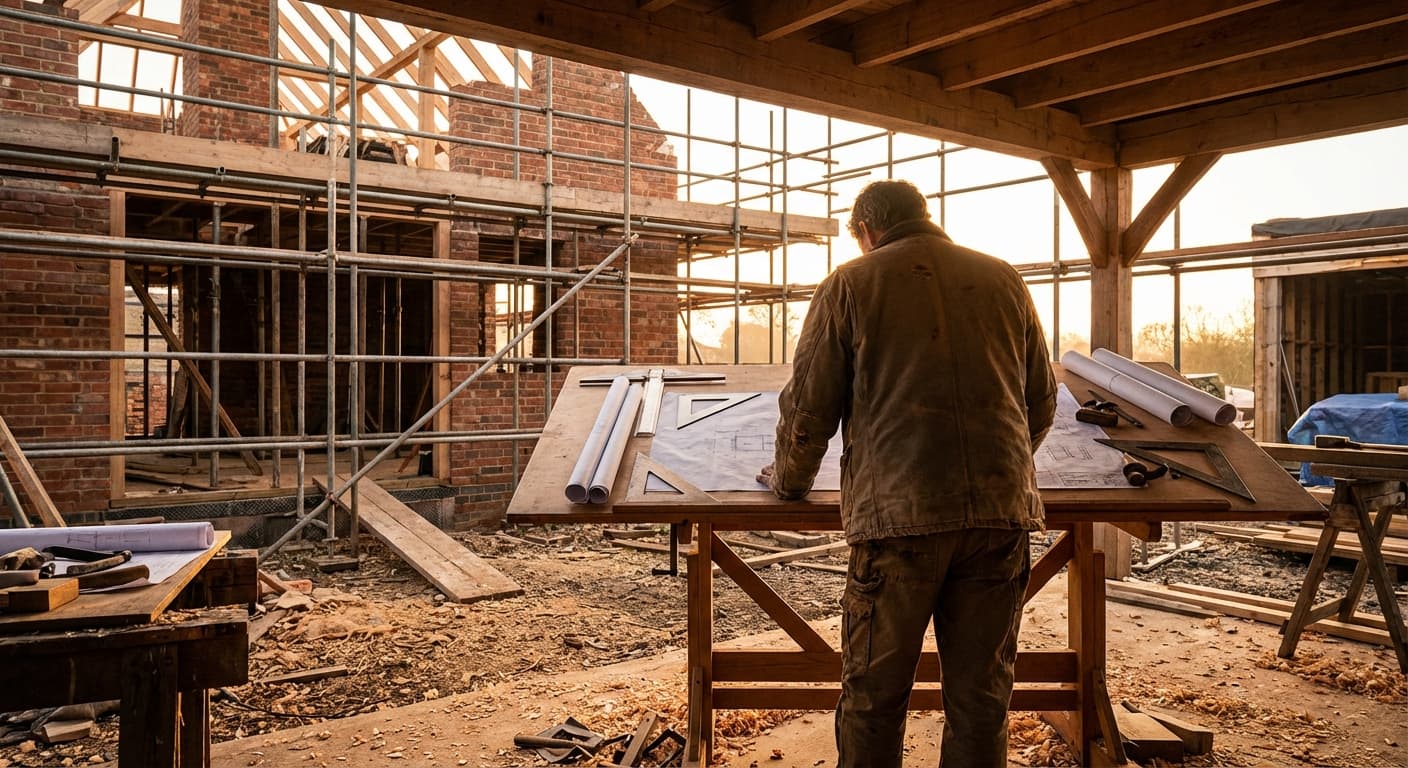
You're the architect. You're the builder. You're the one holding the blueprints.
Now, I know somebody says, "But Jim, bad things happen to good people." And that's true. I've never denied that. Unfair things happen. Tragedy strikes. Illness comes. Markets crash.
But here's what I've learned: it's not what happens that determines your life. It's what you do about what happens.
The economy may change. You'd better change faster.
The market may shift. You'd better shift with it.
Someone may let you down. You'd better not let yourself down.
Personal responsibility isn't about blame. It's about power. The power to design your days, shape your future, and become the person you're capable of becoming.
My friend, your life is waiting for your instructions. What are you going to tell it this year?
Continue Reading
More from Jim Rohn's teachings
Your Life Is Your Own Project: The Freedom of Personal Responsibility

Stand Guard at the Door of Your Mind

The Questions That Changed My Life: Why What You Ask Yourself Matters More Than What You Know

The Conversation That Determines Your Destiny
Subscribe to the Jim Rohn Newsletter
Join our community receiving weekly wisdom for a better life.