The Cost of Neglect
Written based on the teachings of Jim Rohn
A friend of mine once told me something I never forgot. He said, "Jim, I didn't get out of shape. I just woke up one day and realized I'd been out of shape for years."
That stopped me. Because he was right. Nobody gets a telegram that says, "Dear Sir, you have officially let yourself go. Please report to the consequences department." It doesn't work like that.
Neglect is quiet. That's what makes it so dangerous.
I've shared this philosophy many times, and I believe it with everything I have: failure is not a single, cataclysmic event. Failure is a few errors in judgment, repeated every day. And nowhere does that principle show up more clearly than in how we treat our own bodies.
Let me ask you a question. Will one candy bar kill you?
Of course not. One candy bar is nothing. It's a moment of pleasure, a little sugar, and life goes on.
But what about one candy bar every single day for twenty years? Now that's a different conversation, isn't it? That's not a treat anymore. That's a lifestyle. And lifestyles have consequences.
We call that the compounding effect of neglect.
See, most people understand compounding when it works in their favor. You put money in the bank, it earns interest, that interest earns interest, and one day you look up and you've built something substantial. Everybody likes that story.
But compounding works both ways. It works for you, and it works against you. And when it works against you, it doesn't send you a warning. It just keeps a quiet little tab running in the background. And one day the bill comes due.
A man came up to me after a seminar and said, "Jim, I know I should take better care of myself, but I just don't have the time."
And I said, "Well, let me ask you something. How much time does a heart attack take?"
He didn't laugh. I wasn't trying to be funny.
Here's what I've learned. The things that are easy to do are also easy not to do. Taking a thirty-minute walk — easy to do. Also easy not to do. Eating an apple instead of a doughnut — easy to do. Also easy not to do. Going to bed at a reasonable hour — easy to do. Also easy not to do.
And on any given day, the difference between doing it and not doing it is almost invisible. You skip the walk today, and nothing happens. You eat the junk food today, and you feel fine. You stay up too late tonight, and tomorrow you're a little tired but you get through it.
No alarms go off. No lights flash.
That's the trap.
Because neglect doesn't hurt today. Neglect hurts five years from now, ten years from now, twenty years from now. And by the time you feel it, the cost has already been mounting for so long that the bill is enormous.
I got a good phrase for you: neglect is a whisper that becomes a shout. But by the time it's shouting, you've been not listening for a very long time.
Somebody once said to me, "Jim, I used to be able to eat anything I wanted and feel fine."
And I said, "You never could. You just couldn't feel the cost yet."
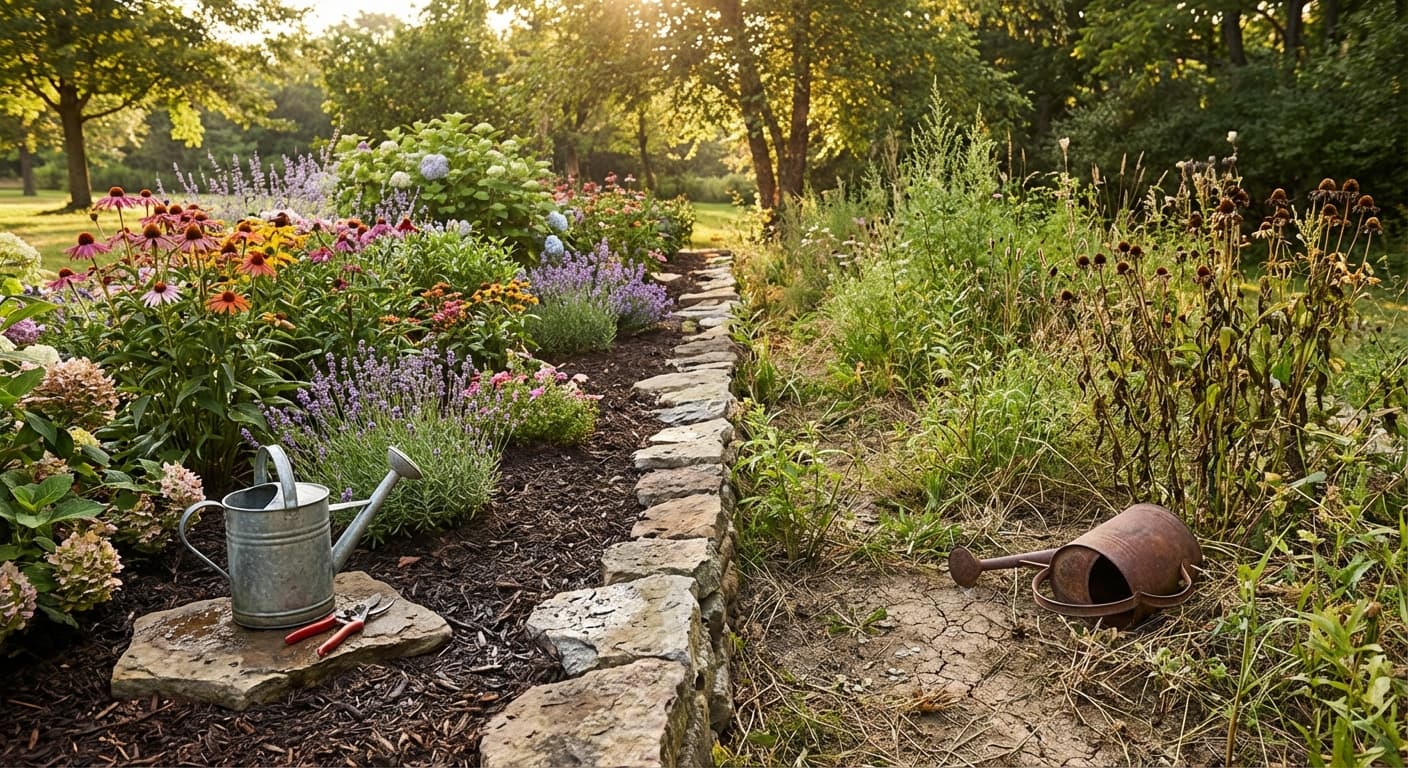
That's a distinction worth understanding. The consequences were always there. You just hadn't accumulated enough of them to notice. It's like termites in a house. The house looks fine. The house looks solid. But quietly, day after day, something is being eaten away. And then one afternoon a floor gives way and everyone acts surprised. But the termites weren't surprised. They'd been at it for years.
Now let me give you the other side of this, because I never want to leave you with just the problem.
The same principle that makes neglect so destructive makes discipline so powerful. A few simple disciplines, practiced every day. That's the formula. Not dramatic overhauls. Not heroic efforts. Just a few simple things, done consistently.
You take a walk today. Nothing changes. You take a walk tomorrow. Nothing changes. You take a walk every day for a year. Now something has changed. Your energy is different. Your sleep is different. Your thinking is different. The way you carry yourself is different.
One walk didn't do it. A year of walks did it. Right?
And here's what I find so interesting. The effort required for the discipline and the effort avoided by the neglect — they're almost the same size. The walk takes thirty minutes. Skipping the walk saves thirty minutes. The difference in effort on any single day is nearly nothing. But the difference in outcome over a lifetime is everything.
That's why I say the major thing that makes the difference is not the size of the activity. It's the consistency. Neglect compounds. But so does discipline. And you get to choose which one you're feeding.
So here's my challenge to you, my friend. Take an honest look at the small things you've been letting slide. Not the big things — the small things. The glass of water you didn't drink. The vegetables you skipped. The extra hour you stayed on the couch. The sleep you traded for something that didn't matter by morning.
None of those things seem important. And that's exactly why they are.
Don't wait for the bill. Start making deposits now. Small ones. Simple ones. The kind that are easy to do.
Because the cost of neglect is always more than we expect. And the reward of discipline is always more than we imagine. Take care of the life you've been given, my friend. It's the only one you'll get, and it deserves your attention — today, not someday.
Continue Reading
More from Jim Rohn's teachings


Subscribe to the Jim Rohn Newsletter
Join our community receiving weekly wisdom for a better life.