Time Is More Valuable Than Money: The One Resource You Can Never Earn Back
Written based on the teachings of Jim Rohn
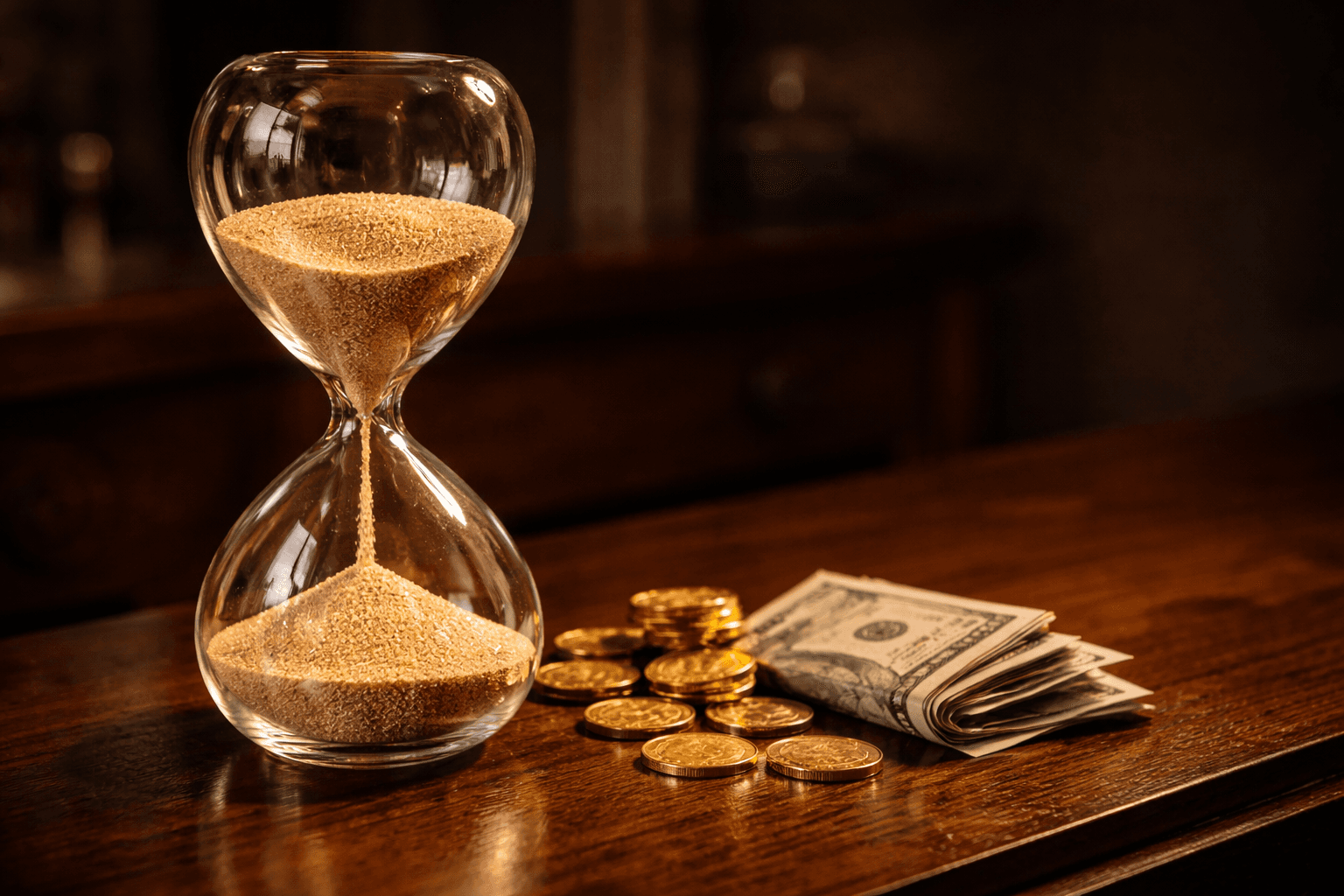
Time Is More Valuable Than Money
I remember sitting with a wealthy friend of mine years ago — successful businessman, built several companies, had everything you might imagine success looks like. And I asked him something I'd been wondering about: "What's the one thing you wish you'd understood earlier?"
He didn't hesitate. "That I can always make another dollar," he said, "but I can't make another hour."
Took me a moment to really hear what he was saying.
The Difference Between Two Kinds of Poverty
Let me tell you something fascinating about poverty. We've got two kinds, and most people only worry about one.
There's financial poverty — that's when your bank account is empty. And then there's time poverty — that's when your life is empty of the hours you need to do what matters.
Here's what I found out: you can recover from financial poverty. I've seen it done. I've done it myself. A man can be broke at 25 and wealthy at 35 if he learns what to do differently. Money is renewable. You can earn it back. You make a mistake, lose it all, you can start over. It's been done a thousand times.
But time?
You cannot start over with time.
Spend an hour poorly and it's gone. Not delayed — gone. You don't get a refund. You don't get a credit. You don't get to file an appeal with the universe. That hour joined all the other hours that came before it, and you'll never see it again.
We call that a non-renewable resource.
The Question Nobody's Asking
Now somebody says to me, "Well, I've got to make a living. I've got bills to pay. I trade my time for money because that's how the world works."
And I say, "Fair enough. But let me ask you something: Are you trading your time, or are you giving it away?"
See, there's a difference.
Trading means you're getting fair value. Giving it away means you're not thinking about what an hour of your life is actually worth.
Most people — and I mean this with respect, because I did this for years myself — most people don't price their hours, they just accept whatever the market offers. They take a job that pays $15 an hour and they never stop to calculate what that means over a year, over a decade, over a lifetime.
That's not a trade. That's surrender.
What the Wealthy Figured Out
Here's what the wealthy understand that most people miss: money is a tool for buying back time.
The fellow who's building real wealth isn't just stacking dollars in an account. He's using those dollars to create systems — businesses, investments, teams of people — that work when he's not working. He's buying his hours back.
The average person thinks: "How can I trade more hours for more money?"
The wealthy person thinks: "How can I trade money for more hours?"
Right?
I met a man one time who told me he used to mow his own lawn every Saturday. Took him three hours. He was making about $50 an hour at his business. So I said to him, "You're paying yourself $50 an hour to mow grass when you could pay someone $30 to do it and spend those three hours working at your actual skill level — or better yet, with your family."
He said, "I never thought of it that way."
I said, "Most people don't."
We save a little money and lose a lot of life.
The Accountant Made a Mistake
Let me give you a good phrase to remember: Your life is the sum of your hours.
Not your bank account. Not your title. Not your car or your house. Your hours.
And here's the thing — the accountant made a mistake when he taught us to measure wealth. He counted money but forgot to count time. So we walk around thinking we're doing fine because we're making more money this year than last year, but we're not asking whether we're getting more life this year than last year.
Are you working more hours or fewer?
Are you spending more time with the people you love or less?
Are you building something that lasts or are you just busy?
These are not soft questions, my friend. These are the hard questions. Because the money you make can go to your kids when you're gone, but the hours you didn't spend with them? Those are gone for both of you.
The Trade Nobody Sees
Most people are making a trade they don't even realize they're making.
They trade five days for two days. They trade energy for exhaustion. They trade youth for retirement — and then they get to retirement and realize they're too tired, too old, or too sick to do what they always said they'd do "someday."
I got a good phrase for you: Someday is not a day of the week.
You can't get time back. You can't save it up. You can't earn interest on it. All you can do is spend it. And the only question that matters is whether you're spending it on purpose or by accident.
What to Do About It
So here's what I'd suggest.
First, start pricing your hours. Sit down — right now, today — and figure out what an hour of your life is actually worth. Not what someone's paying you. What it's worth. Factor in that you've only got so many of them. Factor in what you're not doing with those hours when you're doing something else.
Second, look at where your hours are going. You'd be stunned how much time disappears into things that don't matter. We nickel-and-dime ourselves to death with television, with scrolling, with errands that could be delegated or eliminated.
Third — and this is key — start investing money to buy back time. Hire someone to do the $10-an-hour work so you can do the $100-an-hour work. Or better yet, so you can do the priceless work — the work of being present with your family, of creating something meaningful, of living instead of just making a living.
The Ultimate Accounting
Let me leave you with this.
A man asked me one time, "What's the most valuable thing you own?"
I said, "I don't own it. I'm spending it. And it's my time."
He said, "How do you make sure you don't waste it?"
I said, "I ask myself one question at the end of every day: If I had to buy today back, would I pay what I spent it on?"
You can make more money, my friend. You've got all kinds of ways to do that. But you cannot make more time.
So spend it like you understand what it's worth.
Because you do.
Right?
Continue Reading
More from Jim Rohn's teachings




Subscribe to the Jim Rohn Newsletter
Join our community receiving weekly wisdom for a better life.